
What Is It?
Myopia, commonly known as nearsightedness or short-sightedness, is a refractive error in which distant objects appear blurred while nearby objects are usually seen more clearly.
For clear vision, light entering the eye must focus directly on the retina, the light-sensitive tissue at the back of the eye.
In myopia, light focuses in front of the retina rather than directly on it. This usually happens because the eyeball is longer than normal from front to back, although the shape or focusing power of the cornea and lens can also contribute.
Myopia commonly develops during school-age childhood and may progress through adolescence before stabilizing in early adulthood.
However, its onset and progression vary between individuals, and some adults also experience changes in their prescription.
Myopia can be classified according to its degree and associated ocular changes.
1. Low to Moderate Myopia
People with mild or moderate myopia usually achieve clear distance vision with appropriately prescribed eyeglasses or contact lenses.
2. High Myopia
High myopia is commonly defined by a refractive error of approximately −6.00 diopters or greater in magnitude.
It is often associated with an elongated eyeball and an increased lifetime risk of certain retinal and other ocular complications.
3. Pathologic Myopia
Pathologic myopia refers to structural changes associated with excessive eye elongation that can damage the retina, macula, or other eye tissues.
It is not simply another name for every case of high myopia, although the two may occur together.
Myopia can affect one or both eyes and may coexist with astigmatism.
In children, increasing myopia is important because excessive eye elongation can raise the risk of complications later in life.
Treatment has two separate goals: correcting blurred vision and, when appropriate, slowing the progression of myopia.
Eyeglasses and contact lenses improve vision. Specialized myopia-control interventions may also help reduce the rate of progression in selected children.
Early detection, regular eye examinations, and individualized management can help patients achieve clear vision while supporting long-term eye health.
Symptoms
The main symptom of myopia is blurred distance vision.
Symptoms vary according to the degree of myopia and the patient's age.
Common symptoms include:
• Difficulty seeing distant objects clearly.
• Blurred road signs or classroom boards.
• Squinting to improve distance vision.
• Eye strain during activities requiring clear distance vision.
• Headaches associated with visual effort in some patients.
• Difficulty recognizing people or objects from a distance.
• Reduced clarity when watching television from far away.
• Difficulty seeing clearly while driving, particularly at night.
• Frequent changes in prescription during childhood or adolescence.
Near vision is often relatively clear, particularly in younger patients with uncomplicated myopia.
Signs of Myopia in Children
Children may not realize that their vision is abnormal.
Possible signs include:
• Sitting very close to the television.
• Holding books or screens unusually close.
• Difficulty seeing the classroom board.
• Frequent squinting.
• Moving closer to distant objects to see them clearly.
• Complaints of blurred distance vision.
• Declining performance in activities that require clear distance vision.
These behaviors are not specific to myopia, so a professional eye examination is necessary.
Symptoms of High Myopia Complications
High myopia can be associated with retinal abnormalities that produce symptoms different from ordinary refractive blurring.
Warning signs include:
• Sudden new flashes of light.
• A sudden increase in floaters.
• A dark curtain or shadow in the visual field.
• Sudden loss of vision.
• New central visual distortion or a missing central area.
Such symptoms require urgent ophthalmic assessment because they may indicate retinal tears, retinal detachment, or other serious complications.
Causes
Myopia develops when the optical system of the eye focuses light in front of the retina instead of directly on its surface.
The most common underlying structural change is excessive axial elongation, meaning that the eyeball grows too long from front to back.
Myopia develops through a combination of genetic and environmental influences.
1. Excessive Axial Eye Growth
As the eye grows longer, incoming light focuses in front of the retina.
Axial elongation is a major mechanism behind progressive childhood myopia.
2. Corneal or Lens Focusing Power
In some patients, the cornea or natural lens has greater focusing power than required for the length of the eye.
This can also contribute to myopia.
3. Genetic Susceptibility
Myopia frequently runs in families.
Children with one or both myopic parents are at increased risk, although family history does not determine whether myopia will develop.
4. Limited Outdoor Time
Children who spend less time outdoors have a greater likelihood of developing myopia.
Regular exposure to outdoor daylight appears to help delay or reduce the onset of myopia.
5. Prolonged Near Work
Long periods of reading, studying, or using digital screens at close distances are associated with a greater risk of myopia in children.
The relationship is complex and may involve time spent doing near work, viewing distance, and reduced outdoor activity.
6. Eye Growth and Development
Myopia often develops during the years when the eyes are growing.
The rate of progression may differ considerably between children.
In some cases, myopia develops or changes in adulthood because of refractive changes or other ocular conditions.
Myopia is not caused by an eye infection and is not contagious.
Its development should not be attributed to one activity alone, since multiple biological and environmental factors contribute.
Risk Factors
Several factors are associated with a higher likelihood of developing myopia or experiencing faster progression.
These include:
• Having one or both parents with myopia.
• Developing myopia at a younger age.
• Spending limited time outdoors.
• Prolonged near-work activities.
• Extended periods of close-distance reading or screen use.
• Certain educational and environmental influences.
• Existing progressive myopia during childhood.
Children who develop myopia at a younger age have more years during which progression may occur and may therefore reach higher levels of myopia.
Factors Associated With Myopia-Related Complications
Patients with high myopia or excessive axial elongation may have increased risks of:
• Retinal tears and retinal detachment.
• Myopic macular degeneration.
• Myopic choroidal neovascularization.
• Certain forms of glaucoma.
• Cataract.
• Other vitreoretinal abnormalities.
The risk of these complications varies with the degree of myopia, eye length, age, and individual ocular findings.
Having high myopia does not mean that complications will necessarily develop.
However, regular dilated retinal examinations may be important for detecting associated changes before they cause substantial visual impairment.
Diagnosis
Myopia is diagnosed through a comprehensive eye examination that evaluates visual acuity, refractive error, and overall eye health.
The ophthalmologist may perform the following assessments:
1. Visual Acuity Testing
An eye chart is used to assess how clearly each eye sees at a distance.
Reduced distance visual acuity may suggest myopia or another visual problem.
2. Refraction
Refraction determines the prescription needed to focus light properly onto the retina.
Myopia is generally corrected using lenses with negative, or minus, power.
The prescription may also include cylindrical correction if astigmatism is present.
3. Autorefraction
An automated instrument provides an objective estimate of refractive error.
The result helps guide the examination but is interpreted alongside clinical findings.
4. Cycloplegic Refraction in Children
In children, eye drops may be used to temporarily relax the focusing muscles.
This helps the ophthalmologist obtain a more accurate measurement and distinguish true myopia from temporary excessive focusing.
5. Axial Length Measurement
Specialized optical biometry measures the length of the eyeball.
Axial length is particularly useful when monitoring progressive myopia in children and assessing response to myopia-control treatments.
6. Slit-Lamp Examination
A slit-lamp microscope allows the doctor to evaluate the cornea, lens, and other structures in the front of the eye.
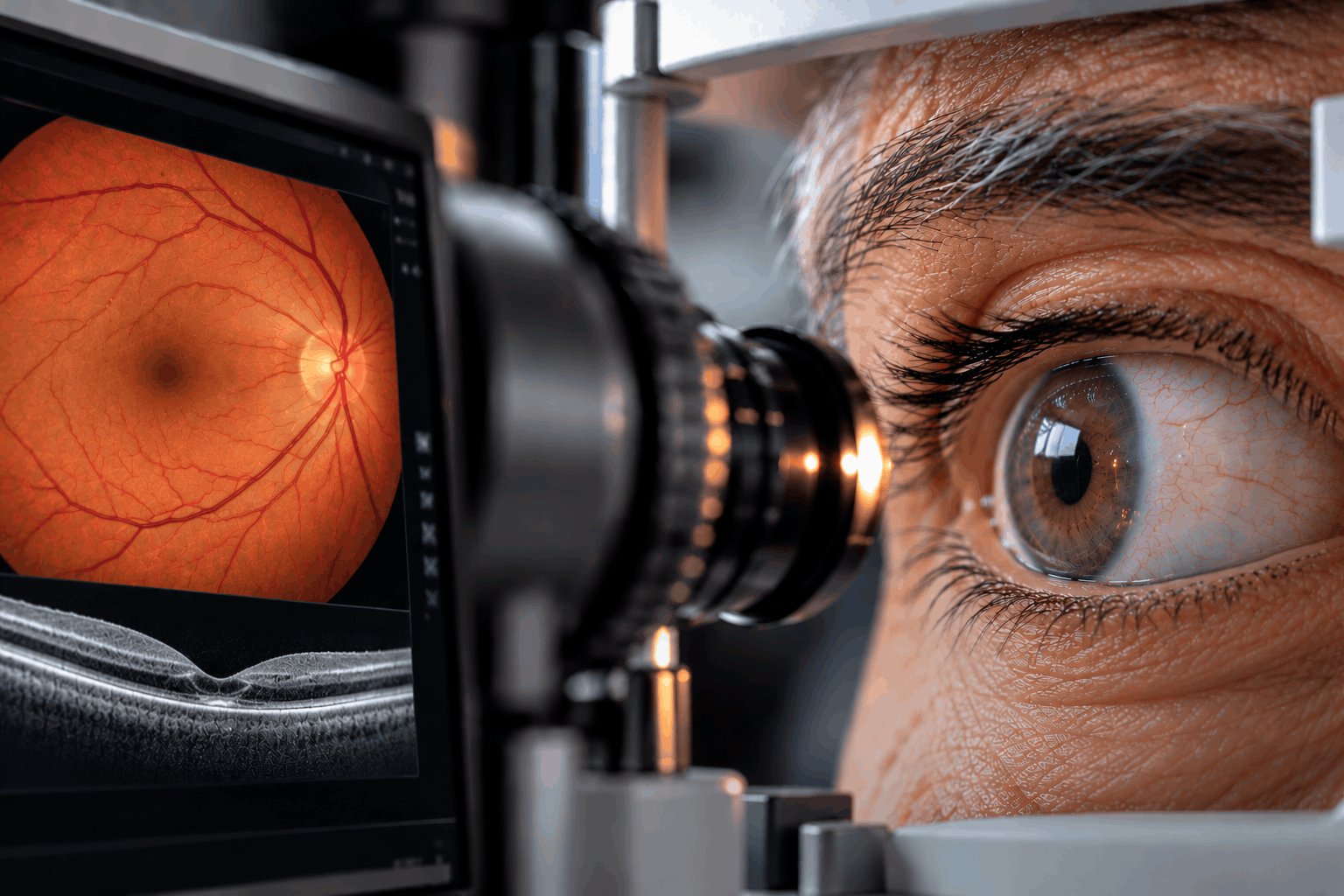
7. Dilated Retinal Examination
Dilating drops enable examination of the retina, macula, and optic nerve.
This is especially important in high myopia, where retinal thinning, peripheral retinal degeneration, or other complications may occur.
8. Optical Coherence Tomography (OCT)
OCT may be recommended when macular or retinal abnormalities are suspected.
It helps visualize the retinal layers and detect conditions associated with pathologic myopia.
9. Corneal Topography or Tomography
These tests may be performed when irregular astigmatism, keratoconus, or refractive surgery suitability needs to be assessed.
10. Follow-Up Measurements
In children with progressive myopia, repeat refraction and axial length measurements may help determine how quickly the condition is changing.
Not every patient requires every test.
The ophthalmologist chooses the appropriate investigations according to age, prescription, visual symptoms, and risk of complications.
Treatment Options
Treatment of myopia has two important objectives:
• Correcting blurred distance vision.
• Slowing myopia progression in suitable children to reduce excessive eye elongation and long-term risk.
The treatment plan depends on age, degree of myopia, prescription stability, eye health, lifestyle, and individual preferences.
1. Prescription Eyeglasses
Eyeglasses are a common and effective way to correct myopia.
Minus-powered lenses help focus incoming light directly onto the retina, improving distance vision.
They are generally safe, easy to use, and suitable for children and adults.
An accurate prescription is important for comfortable and effective vision correction.
2. Contact Lenses
Soft or rigid contact lenses can correct myopia and provide an alternative to eyeglasses.
They may be particularly useful for sports and other activities.
Proper fitting, cleaning, and wearing practices are essential.
Poor contact lens hygiene can lead to serious eye infections.
3. Specialized Myopia-Control Spectacle Lenses
Certain spectacle lens designs are intended not only to correct vision but also to reduce the rate of myopia progression in children.
These lenses use specially designed optical zones to influence peripheral retinal focusing.
Their effectiveness depends on the specific lens design, the child's age, and consistent use.
The availability and regulatory status of these products vary by country.
4. Myopia-Control Contact Lenses
Specially designed multifocal or dual-focus soft contact lenses may help slow myopia progression in selected children.
These lenses aim to modify retinal focusing patterns while providing clear central vision.
They require appropriate fitting, careful hygiene, and regular follow-up.
5. Low-Dose Atropine Eye Drops
Low-dose atropine may be prescribed for selected children with progressive myopia.
Atropine can slow myopia progression and axial elongation, although treatment response depends on the dose, individual patient, and clinical circumstances.
Possible side effects include light sensitivity, pupil dilation, near-vision blur, or local irritation.
The most appropriate concentration, duration, and follow-up schedule must be determined by an ophthalmologist.
Atropine treatment is not suitable for every child, and its regulatory approval and availability vary between countries.
6. Orthokeratology (Ortho-K)
Orthokeratology involves specially fitted rigid contact lenses worn overnight to temporarily reshape the cornea.
This provides improved unaided vision during the day and may slow axial elongation in selected children.
However, overnight contact lens wear carries a risk of serious corneal infection.
Careful patient selection, strict hygiene, and professional monitoring are essential.
7. Lifestyle Measures and Outdoor Activities
Children should be encouraged to spend regular time outdoors, with appropriate sun protection.
Outdoor exposure has evidence supporting a reduced risk of developing myopia.
Regular breaks from prolonged near work and avoiding extremely close viewing distances are sensible supportive measures.
However, lifestyle changes alone may not adequately control established progressive myopia.
8. Laser Vision Correction
Adults with stable prescriptions may be candidates for procedures such as LASIK, PRK, or SMILE.
These procedures reshape the cornea to reduce dependence on glasses or contact lenses.
Suitability depends on corneal thickness, corneal shape, prescription stability, ocular surface health, and other factors.
Laser refractive surgery does not shorten an elongated eyeball or eliminate retinal risks associated with high myopia.
9. Implantable Collamer Lens (ICL) and Other Phakic Lenses
For selected adults, particularly some with higher degrees of myopia, an implantable lens may be considered.
This procedure places a corrective lens inside the eye while preserving the natural lens.
It requires detailed preoperative assessment and carries potential risks, including elevated eye pressure, cataract, infection, and other intraocular complications.
10. Monitoring and Long-Term Management
Children receiving myopia-control treatment require ongoing monitoring of visual acuity, refraction, and sometimes axial length.
Treatment may continue during the years of active progression.
Patients with high myopia may require regular retinal examinations even when their vision is well corrected.
No available treatment can guarantee that childhood myopia will stop progressing completely.
Appropriate management aims to optimize vision, slow progression where possible, and detect complications early.
Prevention & Care
Not every case of myopia can be prevented because genetic and developmental factors are important.
However, certain habits and early clinical management may help reduce the risk of developing myopia or slow its progression in childhood.
Recommended measures include:
• Encourage regular outdoor activities for children.
• Aim for approximately two hours of outdoor time daily when practical, with appropriate sun protection.
• Take breaks during prolonged reading, studying, or digital screen use.
• Avoid holding books and screens excessively close to the eyes.
• Maintain comfortable lighting during near work.
• Ensure children receive age-appropriate vision screening.
• Arrange comprehensive examinations when distance vision becomes unclear.
• Use prescribed glasses or contact lenses correctly.
• Follow recommended myopia-control treatment when appropriate.
• Attend scheduled follow-up appointments.
• Maintain safe contact lens hygiene.
• Seek prompt evaluation for sudden flashes, new floaters, or missing areas of vision.
Outdoor Time and Myopia
Spending more time outdoors during childhood is associated with a reduced likelihood of developing myopia.
Outdoor time is not a substitute for glasses, prescribed treatment, or eye examinations.
Screen Use and Near Work
Extended periods of close work are associated with myopia risk in children.
Regular visual breaks may reduce discomfort and help avoid prolonged continuous near work.
A commonly used comfort strategy is the 20-20-20 rule: every 20 minutes, look at something approximately 20 feet away for 20 seconds.
This is a practical break strategy, not a proven treatment that reverses myopia.
Care for Children With Progressive Myopia
Children may need more frequent reviews if their prescriptions are changing rapidly or if they are receiving myopia-control treatment.
Follow-up can include measurement of refraction and axial length.
Monitoring helps the ophthalmologist decide whether treatment should continue or be adjusted.
Care for Patients With High Myopia
Patients with high myopia should remain aware of retinal warning signs.
An urgent examination is necessary if sudden flashes, a shower of floaters, a shadow over the vision, or sudden loss of sight occurs.
Regular dilated retinal evaluation may be recommended according to individual risk.
When Should You See an Eye Doctor?
Arrange an eye examination if you experience:
• Persistent blurred distance vision.
• Frequent squinting.
• Difficulty reading distant signs.
• Repeated increases in glasses prescription.
• Concerns about a child's distance vision.
• Vision that remains unclear despite updated lenses.
Seek urgent medical assessment for sudden visual loss, new flashes and floaters, or a dark curtain across the field of vision.
With regular monitoring and appropriate treatment, most people with myopia can achieve clear, functional vision.
Frequently Asked Questions
What is myopia?
Is myopia the same as short-sightedness?
What causes myopia?
Is myopia hereditary?
At what age does myopia usually begin?
Can myopia affect both eyes?
What is high myopia?
Is high myopia the same as pathologic myopia?
Can myopia cause blindness?
Can eyeglasses correct myopia?
Can contact lenses correct myopia?
Can myopia be cured permanently?
Does LASIK cure high myopia?
What is myopia control?
Can atropine drops slow myopia?
What are myopia-control lenses?
What is orthokeratology?
Can outdoor activities help prevent myopia?
Does using digital screens cause myopia?
How often should children with myopia have eye examinations?
Can myopia increase the risk of retinal detachment?
What are the emergency warning signs for someone with high myopia?
Our team can help you with an individual medical assessment.