
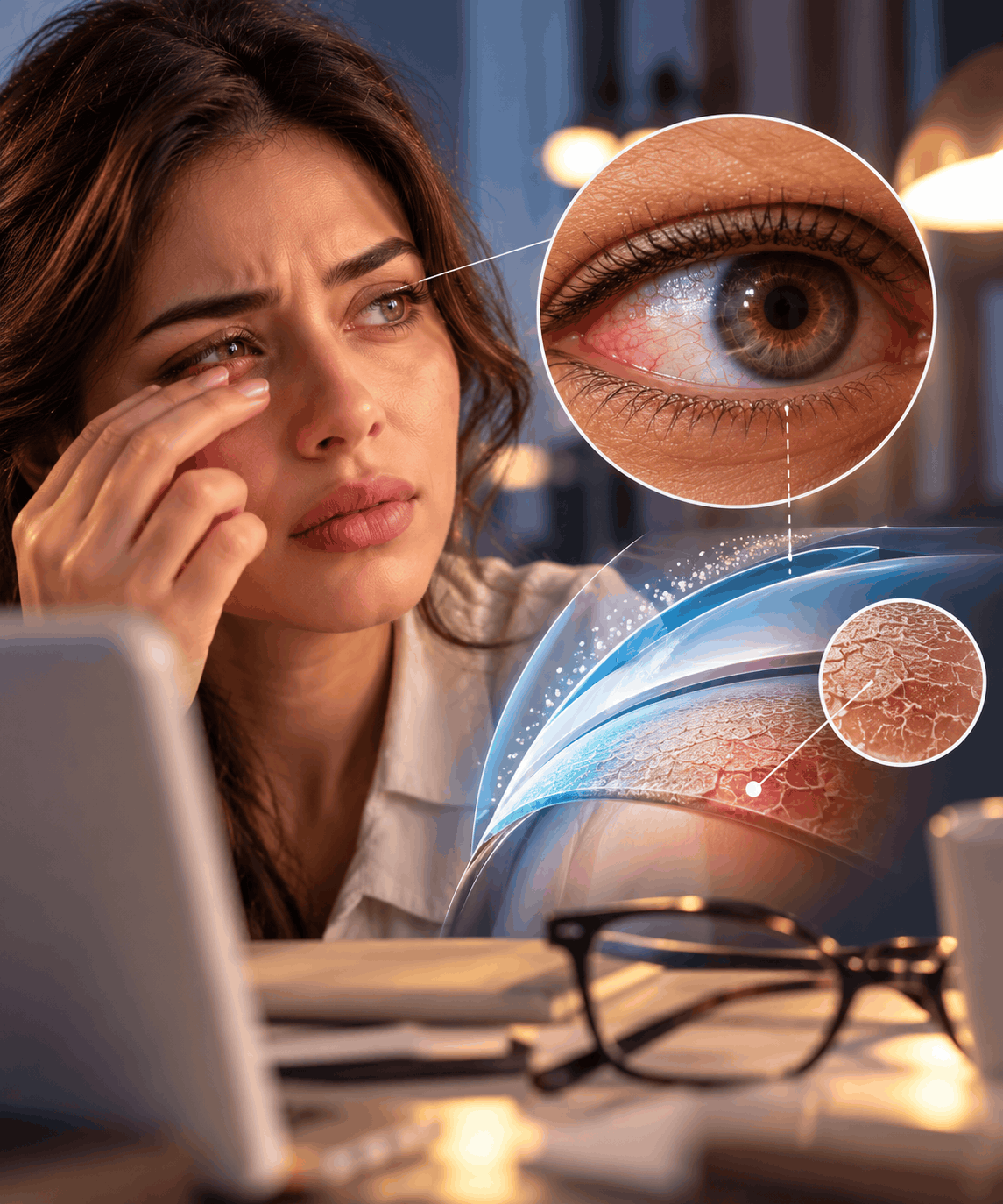
What Is It?
Dry eye disease is a common, multifactorial condition that affects the tear film and the surface of the eye.
A healthy tear film keeps the eyes comfortable, protects the cornea, and helps maintain clear vision. It contains components that work together to lubricate the eye and reduce excessive evaporation.
Dry eye disease develops when tear production, tear quality, or the normal function of the ocular surface becomes disrupted.
The condition can affect one or both eyes and may cause persistent discomfort, intermittent blurred vision, or difficulty with activities such as reading and using digital screens.
Two common mechanisms contribute to dry eye disease:
1. Aqueous-Deficient Dry Eye
The lacrimal glands do not produce enough of the watery component of tears to adequately lubricate the ocular surface.
This may occur with aging, certain medications, or conditions such as Sjögren disease.
2. Evaporative Dry Eye
Tears evaporate too quickly, often because the oily layer of the tear film is inadequate.
Meibomian gland dysfunction (MGD), which affects oil-producing glands in the eyelids, is an important cause of evaporative dry eye.
Many patients have a combination of tear deficiency and excessive evaporation.
Dry eye disease can also involve ocular surface inflammation, changes in blinking, and altered nerve sensitivity.
Symptoms and examination findings do not always match in severity. Some patients experience significant discomfort despite relatively limited visible changes.
Although dry eye disease is often chronic, appropriate evaluation and individualized management can improve symptoms, support visual quality, and help protect the ocular surface.
Symptoms
Dry eye symptoms can vary in intensity and may become worse during particular activities or in certain environments.
Common symptoms include:
• A dry, gritty, or sandy sensation in the eyes.
• Burning or stinging.
• Eye irritation or discomfort.
• Redness.
• Fluctuating or intermittent blurred vision.
• Sensitivity to light.
• Tired or uncomfortable eyes during reading or screen use.
• A feeling that something is trapped in the eye.
• Stringy mucus around the eyes.
• Difficulty wearing contact lenses.
• Excessive watering or reflex tearing.
Why Can Dry Eyes Become Watery?
Dry eye disease can sometimes cause excessive tearing. Irritation of the ocular surface may trigger the production of reflex tears, but these tears may not provide lasting lubrication.
Symptoms may worsen with:
• Prolonged computer or smartphone use.
• Air conditioning or heating.
• Wind, smoke, or dusty environments.
• Long periods of concentrated reading.
• Reduced or incomplete blinking.
Symptoms may affect one or both eyes and often fluctuate throughout the day.
Severe or persistent dry eye can damage the ocular surface and, in some cases, affect corneal health.
Important Warning Signs
Sudden significant loss of vision, severe pain, marked light sensitivity, or a painful red eye requires urgent medical evaluation.
Contact lens wearers with pain, redness, or reduced vision should stop wearing their lenses and seek prompt ophthalmic assessment, as infection or corneal injury must be excluded.
Causes
Dry eye disease develops when the tear film and ocular surface lose their normal balance.
The underlying causes are often interconnected.
1. Reduced Tear Production
The lacrimal glands may produce insufficient tears to maintain a healthy ocular surface.
This can be associated with aging, autoimmune disorders, certain medications, or dysfunction of the tear-producing glands.
2. Increased Tear Evaporation
Tears may evaporate excessively when the outer oily layer of the tear film is inadequate.
Meibomian gland dysfunction is a common contributor. The glands may become obstructed or produce oil of altered quality.
3. Eyelid and Blinking Problems
Incomplete blinking, reduced blinking frequency, and eyelid abnormalities can prevent tears from spreading evenly across the eye.
Prolonged visual concentration, especially when using digital screens, may contribute to these problems.
4. Ocular Surface Inflammation
Inflammation can disrupt tear film stability and contribute to a cycle of irritation and ocular surface damage.
5. Environmental Conditions
Dry air, wind, smoke, air conditioning, and prolonged screen exposure may worsen tear evaporation or discomfort.
6. Medications and Medical Conditions
Certain systemic medications, including some antihistamines, antidepressants, and other medicines, can contribute to dry eye symptoms.
Conditions such as Sjögren disease, thyroid-related disorders, and diabetes may also be associated with ocular surface problems.
7. Contact Lenses and Previous Eye Procedures
Contact lens wear may contribute to dryness or discomfort in susceptible individuals.
Some patients also experience temporary or persistent dry eye symptoms after refractive or other eye surgery.
Because dry eye disease has multiple possible causes, identifying the main contributing factors is essential for selecting appropriate treatment.
Risk Factors
Several factors may increase the likelihood of developing dry eye disease.
These include:
• Increasing age.
• Female sex and certain hormonal changes.
• Meibomian gland dysfunction.
• Blepharitis or chronic eyelid inflammation.
• Autoimmune conditions, particularly Sjögren disease.
• Diabetes and certain thyroid disorders.
• Long periods of digital screen use.
• Reduced or incomplete blinking.
• Wearing contact lenses.
• Exposure to dry air, wind, smoke, or air conditioning.
• Certain medications that reduce tear production.
• Previous refractive or other eye surgery.
• Eyelid abnormalities that interfere with normal closure or blinking.
Some patients have several contributing factors at the same time.
Having a risk factor does not necessarily mean that dry eye disease will develop.
Patients with persistent symptoms should undergo an appropriate eye examination rather than relying on symptoms alone to identify the cause.
Diagnosis
Dry eye disease is diagnosed through a combination of symptom assessment and examination of the tear film, eyelids, and ocular surface.
The ophthalmologist may perform the following investigations:
1. Medical History and Symptom Assessment
The doctor reviews the type, frequency, and severity of symptoms, as well as screen habits, contact lens use, medications, medical conditions, and environmental exposures.
Standardized symptom questionnaires may help document how dry eye affects daily activities.
2. Slit-Lamp Examination
A specialized microscope is used to examine the cornea, conjunctiva, eyelids, tear film, and meibomian gland openings.
The examination can identify inflammation, debris, abnormal eyelid margins, and signs of ocular surface damage.
3. Tear Break-Up Time (TBUT)
This test measures how long the tear film remains stable after blinking.
A reduced tear break-up time may indicate excessive tear film instability.
A non-invasive version of the test may be performed with specialized equipment.
4. Ocular Surface Staining
Special dyes, including fluorescein or lissamine green, may reveal areas of ocular surface damage or abnormal epithelial health.
5. Schirmer Test
A small paper strip is placed near the lower eyelid to help assess tear production.
This test may be particularly useful when aqueous tear deficiency is suspected.
6. Meibomian Gland Assessment
The ophthalmologist examines the eyelid margins and evaluates the quality and expression of oil from the meibomian glands.
7. Meibography
Specialized imaging can help evaluate the structure of the meibomian glands and identify gland loss or other changes.
8. Tear Osmolarity and Other Specialized Tests
In selected patients, tear osmolarity testing or additional ocular surface assessments may help evaluate tear film abnormalities.
Not every patient requires every test.
Dry eye symptoms can overlap with allergies, eyelid disorders, infections, and other ocular surface conditions. The ophthalmologist considers these alternatives when making a diagnosis.
The combination of symptoms, clinical signs, and diagnostic findings helps guide an individualized treatment plan.
Treatment Options
Dry eye disease treatment aims to improve tear film stability, relieve discomfort, control inflammation when present, and protect the ocular surface.
Treatment is selected according to the underlying cause, severity, and response to previous care.
1. Artificial Tears and Lubricating Products
Artificial tear eye drops are a common first-line treatment for dry eye disease.
They help supplement the tear film and temporarily improve comfort.
Different formulations may be recommended depending on whether the main problem is tear deficiency or excessive evaporation.
Preservative-free preparations may be preferable for patients requiring frequent use or those sensitive to preservatives.
Lubricating gels or ointments may provide longer-lasting relief, particularly at night, although they can temporarily blur vision.
2. Warm Compresses and Eyelid Hygiene
Warm compresses and appropriate eyelid cleaning can be helpful when meibomian gland dysfunction or associated eyelid inflammation contributes to dry eye symptoms.
Warmth can help improve the flow of oil from the eyelid glands.
The ophthalmologist may recommend a specific eyelid care routine based on the examination findings.
3. Prescription Anti-Inflammatory Treatment
When ocular surface inflammation contributes to persistent dry eye, the ophthalmologist may prescribe medications such as topical cyclosporine or other appropriate anti-inflammatory therapies.
In selected cases, short courses of topical corticosteroids may be used under close ophthalmic supervision.
Steroid eye drops should not be used without medical guidance because they can cause complications, including increased eye pressure.
The choice and availability of prescription products vary by country and individual circumstances.
4. Punctal Plugs
Punctal plugs are small devices that may be placed into the tear drainage openings to help retain tears on the ocular surface.
They can be considered in selected patients, particularly when tear conservation is beneficial.
The ophthalmologist assesses whether ocular surface inflammation or other factors should be addressed before insertion.
5. Meibomian Gland Treatments
For patients with significant meibomian gland dysfunction, additional procedures may be considered.
Options can include professionally performed gland expression, thermal treatments, or selected device-based therapies.
Intense pulsed light (IPL) may be considered in appropriate patients with evaporative dry eye, depending on the clinical findings, available evidence, and local treatment availability.
Not every patient is suitable for these procedures.
6. Contact Lens and Environmental Adjustments
Patients may benefit from reviewing their contact lens type, wearing schedule, and lens care routine.
Changes to screen habits, blinking, room humidity, and exposure to airflow may also help reduce symptoms.
7. Advanced Treatment for Severe Dry Eye
Patients with severe or treatment-resistant disease may require specialist management.
Depending on the cause, options may include autologous serum eye drops, therapeutic scleral lenses, or other measures designed to protect the ocular surface.
Underlying systemic diseases, eyelid abnormalities, or other contributing conditions may also require treatment.
Long-Term Management
Dry eye disease is often a chronic condition. Symptoms may improve with treatment but can recur.
Regular follow-up allows the ophthalmologist to assess treatment response, adjust therapy, and monitor corneal health.
No single treatment is appropriate for every patient. A personalized approach is important for achieving sustained symptom control.
Prevention & Care
Not every case of dry eye disease can be prevented, but daily habits and appropriate medical care can help reduce symptoms and protect the eyes.
Recommended measures include:
• Take regular breaks during prolonged screen use.
• Blink fully and frequently while reading or using digital devices.
• Avoid directing air conditioning, fans, or heaters toward the face.
• Consider a humidifier when indoor air is unusually dry.
• Wear protective or wraparound eyewear in windy conditions when appropriate.
• Avoid smoking and exposure to cigarette smoke.
• Maintain appropriate contact lens hygiene and wearing habits.
• Follow recommended eyelid hygiene measures if you have meibomian gland dysfunction.
• Use lubricating eye drops as recommended by your eye care professional.
• Attend follow-up appointments when symptoms are persistent or recurring.
• Discuss medications that may contribute to dry eye with your treating physician.
Do not stop prescribed systemic medications without medical advice.
Screen Use and Blinking
Concentrating on digital screens often reduces blinking frequency or completeness.
Taking regular visual breaks and making an effort to blink normally may help reduce tear evaporation and visual discomfort.
Contact Lens Care
If contact lenses cause significant dryness, redness, or discomfort, stop wearing them until the cause has been assessed.
Never continue contact lens wear through painful redness or reduced vision.
When Should You See an Eye Doctor?
Arrange an ophthalmic examination if you experience:
• Persistent burning, irritation, or gritty sensations.
• Recurrent blurred vision that improves temporarily after blinking.
• Frequent discomfort during screen use.
• Persistent contact lens intolerance.
• Symptoms that do not improve with appropriate lubricating care.
Seek urgent ophthalmic assessment for severe pain, sudden reduction in vision, marked redness, or significant light sensitivity.
Early diagnosis and appropriate treatment can help reduce discomfort and prevent complications involving the ocular surface.
Frequently Asked Questions
What is dry eye disease?
Can dry eye disease affect vision?
Why do my eyes water if they are dry?
What causes dry eye disease?
Is dry eye disease permanent?
Can screen use make dry eyes worse?
What is meibomian gland dysfunction?
How is dry eye diagnosed?
Are artificial tears suitable for everyone?
Do I need preservative-free eye drops?
Can dry eye disease be cured?
Do warm compresses help dry eye?
What are punctal plugs?
Can contact lenses cause dry eye symptoms?
Is dry eye the same as eye allergy?
When should I seek urgent medical attention?
Our team can help you with an individual medical assessment.