
What Is It?
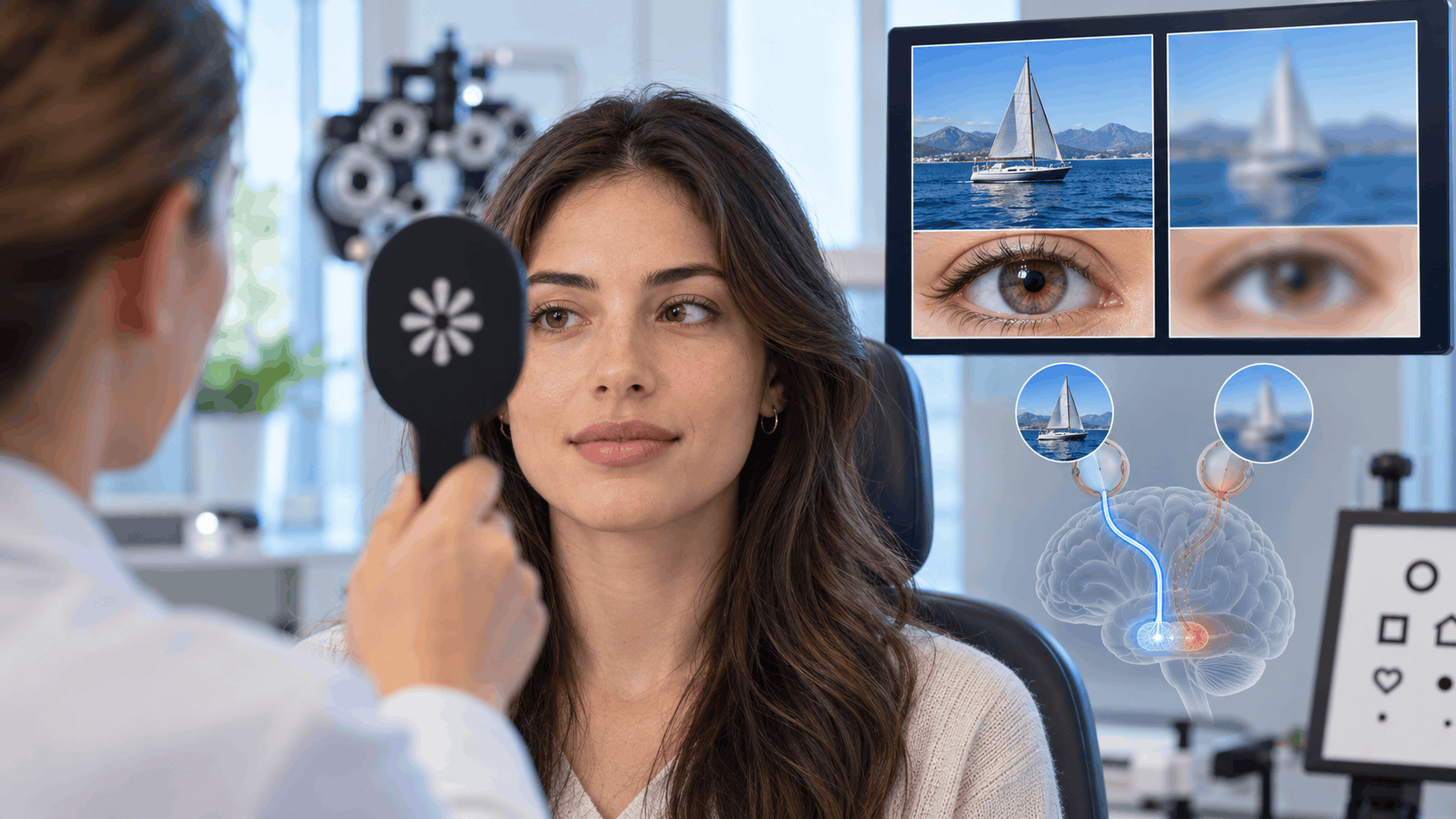
Amblyopia, commonly known as lazy eye, is a neurodevelopmental vision disorder that develops when normal visual development is disrupted during childhood.
During early childhood, the eyes and brain work together to develop clear vision. If one eye consistently provides a blurred image or the eyes send conflicting visual information, the brain may begin to favor the better-seeing eye.
Over time, the visual pathways serving the affected eye do not develop normally, resulting in reduced vision that cannot be fully explained by an eye examination finding or immediately corrected with ordinary prescription lenses.
Amblyopia most commonly affects one eye, but it can sometimes affect both eyes.
It is one of the leading causes of reduced vision in children and may remain undetected because young children often do not recognize or report a problem.
Three common types of amblyopia include:
1. Refractive Amblyopia
This develops when significant uncorrected refractive errors interfere with normal visual development.
It may occur when one eye has a substantially different prescription from the other, a condition called anisometropia.
Amblyopia can also affect both eyes when significant refractive errors are present bilaterally.
2. Strabismic Amblyopia
This occurs when the eyes are misaligned and the brain suppresses the visual information from one eye to avoid conflicting images.
3. Deprivation Amblyopia
This develops when a physical obstruction prevents clear visual stimulation during early childhood.
Possible causes include congenital cataracts, significant drooping of the eyelid (ptosis), and corneal opacities.
Deprivation amblyopia can be particularly severe and requires prompt evaluation.
Amblyopia is not the same as strabismus. Strabismus refers to eye misalignment, while amblyopia refers to reduced visual development. They may occur together or separately.
Early diagnosis and treatment offer the best opportunity to improve vision. However, selected older children and adolescents may also benefit from treatment.
Treatment depends on the underlying cause, the child's age, the severity of amblyopia, and the response to therapy.
Symptoms
Amblyopia often develops without obvious symptoms, particularly when only one eye is affected.
Children may function normally using their better-seeing eye, making the problem difficult for parents to notice.
Possible signs and symptoms include:
• Reduced vision in one eye.
• Difficulty seeing clearly even with an appropriate initial glasses prescription.
• Squinting or closing one eye while looking at objects.
• Tilting or turning the head to see more clearly.
• Difficulty judging distances or depth.
• Problems catching balls or performing activities requiring accurate depth perception.
• One eye turning inward, outward, upward, or downward when associated with strabismus.
• Difficulty with certain visual tasks at school.
• Resistance or distress when the better-seeing eye is covered.
Some children with amblyopia have eyes that appear completely normal.
Amblyopia itself does not typically cause eye pain or sudden vision loss.
Warning Signs in Children
Parents should arrange a prompt pediatric eye examination if they notice:
• Persistent eye misalignment.
• An abnormal white or cloudy appearance in the pupil.
• A drooping eyelid that obstructs vision.
• Poor visual attention or difficulty following objects.
• A significant difference in vision between the two eyes.
A white pupil, significant visual abnormality, or sudden change in eye appearance requires urgent medical assessment because conditions other than amblyopia may be present.
Routine childhood vision screening is essential, even when no symptoms are noticeable.
Causes
Amblyopia develops when normal visual development is disrupted during the early years of life.
The brain requires clear, balanced visual input from both eyes to develop normal vision.
When one eye sends an unclear image or the eyes provide conflicting signals, the brain may suppress input from the affected eye.
If this continues during childhood, reduced visual acuity may persist.
Common causes include:
1. Unequal Refractive Errors (Anisometropia)
A significant difference in the focusing power of the two eyes may cause one eye to consistently produce a blurrier image.
The brain increasingly relies on the clearer eye, reducing normal visual development in the other eye.
2. High Refractive Errors in Both Eyes
Significant uncorrected farsightedness, nearsightedness, or astigmatism in both eyes can interfere with visual development.
This may cause bilateral refractive amblyopia.
3. Strabismus
Strabismus occurs when the eyes are not properly aligned.
The brain may suppress information from one eye to avoid double vision or conflicting visual images.
Persistent suppression during childhood can result in amblyopia.
4. Congenital or Childhood Cataracts
A cloudy natural lens can prevent a clear image from reaching the retina.
If the obstruction occurs during visual development, deprivation amblyopia may develop.
5. Significant Ptosis or Corneal Opacity
A severely drooping eyelid or a corneal opacity can obstruct the visual axis and interfere with visual stimulation.
6. Combined Causes
Some children develop amblyopia because of more than one problem, such as strabismus combined with a significant refractive error.
Amblyopia is not caused by a child's lack of effort, poor concentration, or unwillingness to use an eye.
Accurate identification of the underlying cause is necessary because treatment must address both the visual developmental problem and any contributing eye condition.
Risk Factors
Several factors may increase the likelihood of developing amblyopia.
These include:
• A family history of amblyopia or strabismus.
• Premature birth.
• Low birth weight.
• Significant uncorrected refractive errors.
• A substantial difference in refractive error between the two eyes.
• Childhood strabismus.
• Congenital cataracts or other conditions that obstruct vision.
• Significant congenital ptosis.
• Certain developmental or neurological conditions.
• Delayed identification of childhood vision problems.
Children with one or more risk factors may require closer ophthalmic monitoring.
However, amblyopia can develop even in children without a known family history or obvious external eye abnormality.
The absence of visible symptoms does not exclude amblyopia.
Age-appropriate vision screening and timely comprehensive eye examinations help detect the condition before visual development is permanently affected.
Diagnosis
Amblyopia is diagnosed through a comprehensive pediatric eye examination that assesses visual development, refractive errors, eye alignment, and the health of the eyes.
The ophthalmologist determines whether reduced vision is caused by amblyopia, an underlying eye disorder, or a combination of conditions.
1. Medical and Developmental History
The doctor reviews the child's age, birth history, developmental milestones, family history, previous vision screening results, and any symptoms noticed by parents or teachers.
2. Visual Acuity Assessment
Age-appropriate visual acuity tests measure how clearly each eye sees separately.
Depending on the child's age and cooperation, testing may use pictures, symbols, letters, or other pediatric vision assessment methods.
A significant difference in vision between the two eyes may suggest amblyopia.
3. Cycloplegic Refraction
Special eye drops temporarily relax the eye's focusing mechanism to allow accurate measurement of refractive error.
This is particularly important in children because their strong focusing ability can otherwise hide significant farsightedness.
The results help determine whether glasses are needed.
4. Eye Alignment and Motility Examination
Cover tests and eye movement assessments help identify strabismus or abnormal eye alignment.
The ophthalmologist also examines how well the eyes move and work together.
5. Binocular Vision and Depth Perception Testing
When age and cooperation permit, tests may assess stereopsis (depth perception) and binocular visual function.
6. Slit-Lamp and Ocular Health Examination
The front of the eye is examined for conditions such as cataracts, corneal opacities, or eyelid abnormalities that could interfere with vision.
7. Dilated Fundus Examination
The ophthalmologist assesses the retina and optic nerve to exclude structural abnormalities that could explain reduced vision.
8. Follow-Up Visual Assessment
After appropriate glasses are prescribed, visual acuity may be reassessed to determine how much improvement occurs with optical correction alone.
Not every child requires every specialized test.
The diagnosis depends on the clinical findings, age, cooperation, and presence of underlying visual or ocular abnormalities.
Amblyopia should not be diagnosed without considering other possible causes of reduced vision.
Treatment Options
The main goal of amblyopia treatment is to improve vision in the affected eye and support normal visual development.
Treatment is most effective when started during childhood, especially at younger ages. Nevertheless, selected older children and adolescents may also experience meaningful improvement.
The treatment plan depends on the cause, severity, age, and response to previous therapy.
1. Prescription Eyeglasses or Contact Lenses
Correcting refractive errors is often the first step in amblyopia management.
Appropriate glasses help provide a clear retinal image and may improve vision substantially, particularly in refractive amblyopia.
Some children improve with optical correction alone, while others require additional treatment.
Contact lenses may be considered in selected cases, such as a large difference in prescription between the eyes.
2. Eye Patching (Occlusion Therapy)
Patching involves covering the better-seeing eye for a prescribed period to encourage use of the amblyopic eye.
The number of hours depends on the child's age, visual acuity, and response to treatment.
For many children with moderate amblyopia, a relatively short daily patching schedule may be effective.
More intensive patching may be necessary in selected cases.
The duration and schedule must be determined by the pediatric ophthalmologist.
Parents should not begin prolonged patching without medical supervision because inappropriate use can interfere with visual function and treatment monitoring.
3. Atropine Penalization
Atropine eye drops may be prescribed for the better-seeing eye to temporarily blur its near vision and encourage use of the amblyopic eye.
Atropine can be an effective alternative to patching for appropriate patients.
The ophthalmologist determines the dosing schedule and evaluates potential side effects and contraindications.
Atropine should only be used under medical supervision.
4. Optical Penalization
In selected cases, special filters or adjustments to the better-seeing eye's optical correction may be used to encourage visual activity in the amblyopic eye.
These approaches may be considered when patching or medication is not suitable.
5. Binocular and Digital Therapies
Some newer treatments use interactive digital activities, specialized glasses, or binocular visual stimulation to encourage coordinated use of both eyes.
Certain digital amblyopia treatments have received regulatory clearance in specific countries and age groups.
Their suitability, availability, expected benefits, and cost vary.
They should be selected by the treating ophthalmologist rather than used as an unsupervised substitute for established treatment.
6. Treatment of Underlying Eye Conditions
When amblyopia is caused by an obstruction to vision, prompt treatment of the underlying condition is essential.
Examples include:
• Cataract surgery for selected childhood cataracts.
• Surgery for severe ptosis that obstructs the visual axis.
• Appropriate treatment of significant corneal abnormalities.
• Strabismus treatment when clinically indicated.
Strabismus surgery can improve eye alignment but does not automatically eliminate amblyopia.
Additional treatment with glasses, patching, or other therapies may still be required.
7. Monitoring Treatment Response
Regular follow-up appointments are essential to assess progress.
The ophthalmologist monitors:
• Visual acuity in each eye.
• Compliance with prescribed glasses and treatment.
• Eye alignment and binocular function.
• Possible treatment-related problems.
• Whether the current treatment plan needs adjustment.
Improvement may begin within weeks, but treatment commonly takes months and sometimes longer.
8. Preventing Recurrence
Amblyopia can recur after successful treatment, especially when treatment is stopped abruptly.
Some children require gradual reduction of treatment intensity and continued monitoring.
Parents should follow the ophthalmologist's instructions about treatment duration and follow-up.
Early identification, appropriate treatment, and consistent participation by the child and family provide the best opportunity for lasting visual improvement.
Complete normalization of vision cannot be guaranteed in every case.
Prevention & Care
Amblyopia cannot always be prevented, but early detection and timely treatment can reduce the risk of permanent visual impairment.
Recommended measures include:
• Ensure children receive age-appropriate vision screening.
• Arrange a comprehensive eye examination when screening identifies an abnormality.
• Follow up promptly if a child shows eye misalignment or other visual concerns.
• Encourage consistent use of prescribed glasses.
• Follow patching or atropine treatment schedules exactly as prescribed.
• Attend regular follow-up appointments to monitor treatment response.
• Inform the ophthalmologist about difficulties with patching, glasses, or treatment adherence.
• Seek prompt care for suspected childhood cataracts, significant ptosis, or other conditions obstructing vision.
• Continue monitoring after improvement because amblyopia may recur.
When Should Children Have Their Vision Checked?
Age-appropriate vision screening should begin during infancy and continue throughout childhood.
Children should have instrument-based screening or visual assessment as recommended for their age and risk factors.
At least one formal visual acuity screening is particularly important between ages 3 and 5, with further screening during school years.
Children who fail screening or have concerning symptoms should receive a comprehensive ophthalmic examination.
Children with a family history of amblyopia, strabismus, or childhood cataract may require individualized assessment.
Supporting Your Child During Treatment
Treatment is often more successful when families create a consistent and supportive routine.
Parents can help by:
• Explaining the purpose of treatment in age-appropriate language.
• Using positive encouragement during patching.
• Ensuring that prescribed glasses are worn as instructed.
• Choosing suitable reading, drawing, or play activities during treatment.
• Discussing skin irritation or treatment difficulties with the ophthalmologist.
When Should You See an Eye Doctor?
Arrange a pediatric eye examination if your child:
• Frequently closes or squints one eye.
• Has persistent eye misalignment.
• Struggles with visual tasks.
• Tilts the head repeatedly when looking at objects.
• Has an abnormal white pupil or a significant eyelid droop.
An abnormal white pupil requires urgent evaluation to exclude serious underlying eye disease.
Early diagnosis is essential because visual development becomes less responsive to treatment with increasing age.
Frequently Asked Questions
What is amblyopia?
Is amblyopia the same as strabismus?
What causes lazy eye?
Can amblyopia affect both eyes?
Can a child have amblyopia without visible eye misalignment?
How is amblyopia diagnosed?
Can glasses alone treat amblyopia?
How does eye patching work?
How many hours should my child wear an eye patch?
What are atropine eye drops used for?
Does amblyopia require surgery?
Will strabismus surgery cure amblyopia?
At what age should amblyopia treatment begin?
Can older children be treated for amblyopia?
Can adults with amblyopia improve their vision?
How long does amblyopia treatment take?
Can amblyopia return after successful treatment?
Is amblyopia painful?
Can amblyopia be prevented?
When should parents arrange an eye examination?
Our team can help you with an individual medical assessment.