
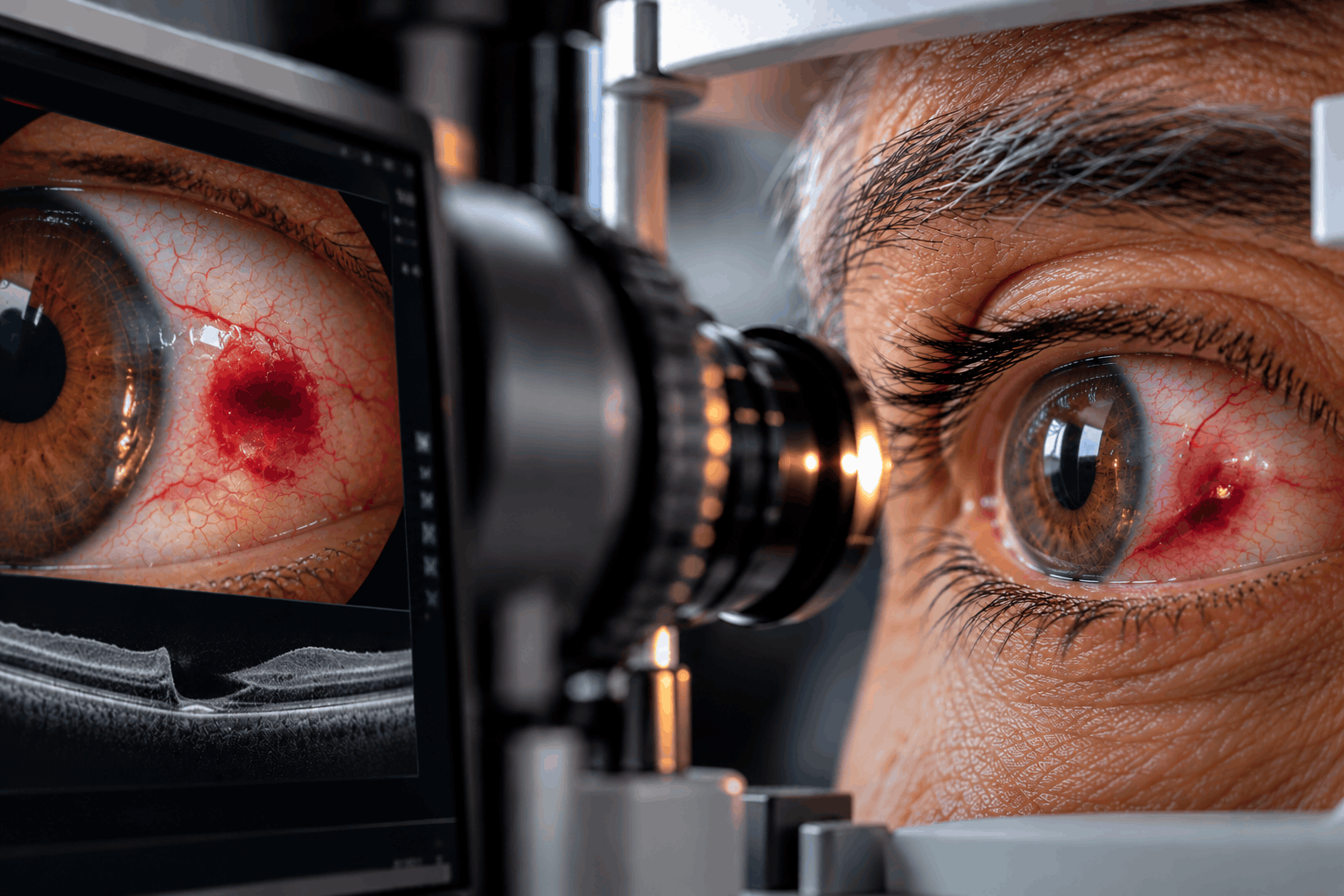
What Is It?
Eye trauma refers to an injury involving the eye or its surrounding structures, including the eyelids, cornea, sclera, lens, retina, optic nerve, and bones of the eye socket.
Eye injuries can occur at home, at work, during sports, in road traffic accidents, or through exposure to hazardous substances.
The severity varies widely. Some injuries cause temporary irritation, while others may lead to serious damage and permanent loss of vision.
Major Types of Eye Trauma
1. Blunt Eye Trauma
Blunt trauma occurs when an object strikes the eye without necessarily penetrating its outer wall.
Examples include injuries caused by balls, fists, falls, or road accidents.
Possible consequences include bruising, bleeding inside the eye, traumatic cataract, retinal damage, or a rupture of the eyeball.
2. Penetrating and Open-Globe Injuries
An open-globe injury occurs when the full thickness of the cornea or sclera is disrupted.
It may result from a sharp object, high-speed metal fragment, glass, or severe blunt impact.
Open-globe injuries are ophthalmic emergencies that often require urgent surgery.
3. Corneal Abrasions
A corneal abrasion is a scratch affecting the outer surface of the cornea.
It may be caused by fingernails, paper, plant material, contact lenses, or small foreign objects.
Although many uncomplicated abrasions heal, improper management can lead to infection or other complications.
4. Ocular Foreign Bodies
Dust, metal fragments, wood particles, or other materials may become trapped on the eye surface or penetrate deeper structures.
High-velocity foreign bodies can cause serious internal injuries even when the visible wound appears small.
5. Chemical Eye Injuries
Exposure to acids, alkalis, cleaning agents, or industrial chemicals can damage the ocular surface.
Chemical burns require immediate irrigation and emergency medical evaluation.
6. Thermal and Radiation Injuries
Heat, flames, hot liquids, and certain forms of ultraviolet radiation can injure the eyelids, conjunctiva, or cornea.
7. Orbital and Eyelid Injuries
Trauma may affect the bones surrounding the eye, eyelid tissues, tear drainage structures, or muscles controlling eye movement.
Eye injuries may involve several structures at the same time.
A serious injury may not always produce dramatic external changes. Therefore, changes in vision, significant pain, high-speed impact, or suspected penetration require urgent evaluation.
Early diagnosis, appropriate treatment, and careful follow-up are important for protecting vision and preventing complications.
Symptoms
The symptoms of eye trauma depend on the type of injury and the structures affected.
Common symptoms include:
• Eye pain or discomfort.
• Redness or irritation.
• Excessive watering.
• Sensitivity to light.
• Blurred or reduced vision.
• Swelling or bruising around the eye.
• A feeling that something is trapped in the eye.
• Difficulty opening the eyelids.
• Double vision.
• Bleeding in or around the eye.
• New floaters or flashes of light.
• A dark shadow or missing area of vision.
Corneal Injuries
Corneal abrasions or superficial foreign bodies may cause sharp pain, tearing, blinking discomfort, and sensitivity to light.
Blunt Trauma
Blunt injuries can cause eyelid swelling, bruising, internal bleeding, reduced vision, or abnormal pupil appearance.
Penetrating Injuries
A penetrating injury may cause severe pain, visual loss, an irregular pupil, or visible damage to the eye.
However, some penetrating injuries may initially appear less severe than they actually are.
Chemical Injuries
Chemical exposure can cause burning, redness, tearing, blurred vision, and potentially extensive surface damage.
Some severe chemical burns may produce less pain than expected because of nerve damage.
Retinal and Internal Eye Injuries
Damage to the retina or vitreous may produce flashes, floaters, blurred vision, or a dark curtain over part of the visual field.
Emergency Warning Signs
Seek immediate emergency medical care for:
• Sudden or significant reduction in vision after an injury.
• Suspected penetration of the eye.
• An object embedded in the eye.
• Chemical exposure.
• High-speed impact from metal, glass, or other projectiles.
• Severe eye pain.
• Blood visible inside the eye.
• An irregularly shaped pupil after trauma.
• New flashes, floaters, or a dark curtain across vision.
• Double vision or inability to move the eye normally after injury.
• Significant eye injury associated with head trauma.
Do not assume that an injury is minor simply because the eye looks relatively normal.
Causes
Eye trauma may result from several types of physical, chemical, or environmental exposure.
1. Sports Injuries
Balls, rackets, elbows, and accidental collisions may cause blunt eye injuries.
High-impact sports can increase the risk of internal ocular damage.
2. Workplace Accidents
Construction, metalworking, welding, grinding, and woodworking may expose the eyes to high-speed particles, sharp objects, chemicals, or radiation.
3. Household Accidents
Common causes include fingernail scratches, accidental contact with sharp objects, cleaning products, and injuries involving children or pets.
4. Road Traffic Accidents
Collisions may cause eye injuries through broken glass, airbag deployment, or direct impact.
5. Penetrating Objects
Sharp objects and high-speed fragments may cut or penetrate the cornea or sclera.
These injuries may allow microorganisms or foreign material to enter the eye.
6. Chemical Exposure
Acids, alkalis, industrial products, detergents, and other chemicals can injure the ocular surface.
Alkaline chemicals can penetrate ocular tissues rapidly and cause serious damage.
However, concentrated acids and other substances may also cause severe injury.
7. Thermal and Ultraviolet Exposure
Hot liquids, flames, and high-energy ultraviolet radiation may damage ocular tissues.
Examples include thermal burns and ultraviolet keratitis following inadequate eye protection during welding.
8. Falls and Physical Assault
Direct impact to the face or eye can injure ocular tissues and orbital bones.
The severity of an injury depends on the force, material, direction, and site of impact.
Medical evaluation is particularly important after high-velocity or penetrating trauma because serious internal damage may not be immediately visible.
Risk Factors
Certain activities and circumstances increase the likelihood of eye injuries.
Important risk factors include:
• Working with power tools, grinders, drills, or cutting equipment.
• Welding or exposure to flying metal fragments.
• Handling chemicals without appropriate eye protection.
• Participating in sports involving balls, sticks, or direct physical contact.
• Using fireworks or explosive devices.
• Road traffic accidents.
• Home improvement or gardening activities involving flying debris.
• Not wearing appropriate protective eyewear.
• Previous eye surgery or certain structural eye conditions.
• Falls and accidental injuries, particularly in children and older adults.
Children may be injured during play or through access to sharp objects and household chemicals.
Some eyes with previous ocular surgery may be more vulnerable to rupture after significant blunt trauma.
The presence of risk factors does not mean an injury will necessarily occur.
Proper protective eyewear, safe working practices, and appropriate supervision can significantly reduce the risk of many preventable eye injuries.
Diagnosis
Eye trauma is assessed according to the mechanism of injury, visual symptoms, and the possibility of serious damage to the eyeball or surrounding structures.
Emergency assessment takes priority when a penetrating injury, chemical burn, or another sight-threatening condition is suspected.
1. Medical History
The ophthalmologist or emergency team asks about:
• How and when the injury occurred.
• The object or substance involved.
• Whether the impact was high-speed.
• The onset of pain or changes in vision.
• Previous eye surgery or ocular disease.
• Use of protective eyewear.
• Possible associated head or facial injuries.
2. Visual Acuity Assessment
Vision is measured in each eye when this can be done safely.
Visual acuity is an important indicator of injury severity and provides a baseline for future comparison.
3. External Eye Examination
The eyelids, surrounding tissues, and visible parts of the eye are examined for swelling, cuts, foreign bodies, and signs of injury.
4. Slit-Lamp Examination
A slit-lamp microscope allows detailed evaluation of the cornea, conjunctiva, anterior chamber, iris, and lens.
The examination may detect abrasions, inflammation, bleeding, and other abnormalities.
5. Fluorescein Staining
Fluorescein dye may be used to identify corneal abrasions and certain ocular surface defects.
A specialized Seidel test may be performed by a clinician when a leaking eye wound is suspected.
6. Pupil and Eye Movement Assessment
The doctor evaluates pupil shape and reaction to light, eye alignment, and eye movements.
These tests may help identify nerve damage, orbital injury, or other complications.
7. Intraocular Pressure Measurement
Eye pressure may be measured when appropriate.
However, pressure measurement must be avoided when an open-globe injury is suspected because pressure on the eye may worsen the damage.
8. Dilated Retinal Examination
When safe, the retina is examined for hemorrhage, retinal tears, detachment, or other internal damage.
9. Imaging Studies
Depending on the injury, investigations may include:
• CT imaging of the orbits to assess fractures and certain foreign bodies.
• Optical coherence tomography (OCT) to assess retinal or macular injury.
• Ocular ultrasound in selected cases when an open-globe injury has been excluded.
MRI must generally be avoided until a possible metallic intraocular foreign body has been excluded.
10. Chemical Injury Assessment
Following immediate irrigation, clinicians assess the ocular surface, look for retained chemical material, and measure ocular surface pH as appropriate.
Chemical irrigation should not be delayed for a complete examination.
Not every patient requires every test.
When an open-globe injury is suspected, examination is performed with special precautions to avoid pressure or manipulation of the injured eye.
Treatment Options
Treatment of eye trauma depends on the mechanism of injury, structures affected, and severity.
Some superficial injuries can be managed with medication and observation, while severe injuries require emergency surgery or hospital care.
1. Immediate Management of Chemical Injuries
Chemical exposure is an ophthalmic emergency.
For an ordinary chemical splash, immediately irrigate the eye with large amounts of clean running water or suitable saline.
Do not wait for a special eye-washing solution or for medical personnel to arrive.
Continue flushing while emergency medical care is arranged.
Do not attempt to neutralize the chemical with another chemical.
Emergency treatment includes further irrigation, assessment of ocular surface pH, removal of retained chemical particles by trained personnel, and management of tissue damage.
If a penetrating or open-globe injury is already known or strongly suspected, special precautions are required. Do not apply pressure or irrigate the open wound; obtain immediate emergency specialist guidance.
2. Treatment of Corneal Abrasions
Management may include:
• Removal of a superficial foreign body by an appropriately trained clinician.
• Lubricating treatment.
• Antibiotic medication when clinically indicated.
• Pain management.
• Follow-up to confirm healing.
Contact lens wearers may require special evaluation and treatment because of the risk of microbial keratitis.
Topical anesthetic eye drops should not be self-administered repeatedly without medical supervision.
3. Management of Superficial Foreign Bodies
Small, loose particles may sometimes be washed out with clean water.
If a particle remains embedded, causes persistent discomfort, or may have entered the eyeball, professional evaluation is necessary.
Patients should not use tweezers or sharp instruments to remove objects from the eye.
4. Management of Blunt Eye Trauma
Treatment depends on the resulting injury.
Superficial bruising around the eye may be managed with a gentle cold compress placed over the surrounding tissues without pressing on the eyeball.
Significant blunt trauma requires examination for internal bleeding, lens injury, retinal damage, and possible globe rupture.
5. Hyphema Management
Hyphema is bleeding into the front chamber of the eye, commonly following blunt trauma.
It may require activity restrictions, head elevation, protective shielding, medical treatment, and close monitoring of intraocular pressure.
Some severe cases require surgical intervention.
Patients should follow the treating ophthalmologist's guidance about pain medication because certain medicines can increase bleeding risk.
6. Open-Globe and Penetrating Injuries
Open-globe injuries require immediate emergency ophthalmic management.
Initial precautions include:
• Avoiding pressure on the eye.
• Leaving embedded objects in place.
• Protecting the eye with a rigid shield that does not touch the injured globe.
• Avoiding unnecessary manipulation.
• Obtaining urgent surgical assessment.
Treatment may involve surgical closure of the wound, management of intraocular foreign bodies, appropriate systemic antibiotics, and tetanus prophylaxis when indicated.
7. Retinal Injuries
Trauma can produce retinal tears, retinal detachment, vitreous hemorrhage, or other retinal abnormalities.
Treatment may involve:
• Retinal laser photocoagulation.
• Cryotherapy.
• Vitrectomy.
• Other retinal surgery.
The procedure depends on the type and extent of injury.
8. Orbital Fractures and Eyelid Injuries
Some orbital fractures require observation, while others may need surgical repair.
Eyelid injuries involving important structures, including the tear drainage system, may require specialist reconstruction.
9. Treatment of Traumatic Cataract or Glaucoma
Eye trauma may damage the natural lens or the structures that control eye pressure.
Selected patients may require cataract surgery, pressure-lowering medication, or additional procedures.
10. Follow-Up and Visual Rehabilitation
Follow-up is important because certain complications may appear after the initial injury.
Possible delayed problems include:
• Traumatic cataract.
• Elevated eye pressure or glaucoma.
• Retinal tears or detachment.
• Corneal scarring.
• Persistent inflammation.
• Reduced visual function.
Patients with permanent visual impairment may benefit from low vision rehabilitation.
Treatment must be individualized by the ophthalmologist or emergency team, especially when serious internal injury is suspected.
Prevention & Care
Many eye injuries can be prevented through appropriate protection and safe practices.
Recommended measures include:
• Wear suitable protective eyewear during construction, grinding, woodworking, or other hazardous activities.
• Use sport-specific protective eyewear when recommended.
• Follow workplace safety procedures.
• Store cleaning chemicals and sharp objects safely, especially around children.
• Never point sharp objects or projectile devices toward the eyes.
• Use appropriate protective equipment during welding.
• Avoid rubbing an injured eye.
• Attend follow-up appointments after an eye injury.
• Report delayed flashes, floaters, visual field shadows, or other visual changes.
First Aid for Common Eye Injuries
1. Chemical Splash
Immediately rinse the affected eye with plenty of clean running water or saline.
Hold the eyelids open as safely as possible and continue irrigation for at least 20 minutes while arranging emergency care. Longer irrigation may be needed.
Do not delay rinsing to identify the chemical.
Do not attempt to neutralize the substance with another chemical.
2. Suspected Penetrating Injury
Do not rub, wash, or press on the eye.
Do not remove an object embedded in the eye.
If possible, place a rigid protective shield over the eye without applying pressure.
Seek emergency medical care immediately.
3. Minor Loose Particle
A small loose particle may be rinsed away with clean water or sterile saline.
If discomfort persists, the particle appears embedded, or vision is affected, seek medical assessment.
Do not attempt to remove an embedded object yourself.
4. Blunt Impact
Avoid rubbing or pressing the eye.
For minor bruising around the eye, a gentle cold compress may help reduce swelling.
Significant impact, pain, bleeding, or changes in vision require urgent medical assessment.
When Should You Seek Emergency Care?
Go to an emergency department immediately if you experience:
• A chemical injury.
• A penetrating injury or embedded object.
• A high-speed projectile injury.
• Sudden reduction or loss of vision.
• Severe pain.
• Blood visible inside the eye.
• New flashes, floaters, or a dark curtain over vision.
• Significant double vision or restricted eye movement.
• An injury associated with major head or facial trauma.
Do not drive yourself if vision is impaired.
Eye injuries can lead to serious complications even when symptoms initially seem mild.
Prompt assessment and appropriate care provide the best opportunity to preserve vision.
Frequently Asked Questions
What is eye trauma?
What are the main types of eye trauma?
Can eye trauma cause permanent vision loss?
Is every eye injury an emergency?
What should I do if a chemical enters my eye?
Can I use eye drops after a chemical splash?
What should I do if an object is stuck in my eye?
Should I cover an injured eye?
What is a corneal abrasion?
How long does a corneal abrasion take to heal?
Can blunt eye trauma damage the retina?
What is hyphema?
Can a minor-looking injury be serious?
Can I rub my eye after an injury?
Can I wear contact lenses after eye trauma?
How is an eye injury diagnosed?
Does eye trauma always require surgery?
Can eye trauma cause glaucoma?
How can eye trauma be prevented?
When should I seek emergency care?
Our team can help you with an individual medical assessment.